The use of Section 7 is fraught with risks to the autonomy of the central bank, the credibility of the government and the smooth functioning of the financial markets, says A K Bhattacharya.

The central bank filed an affidavit in response to a petition filed by Kochhar last month, challenging her ouster as the chief executive and managing director of ICICI Bank months after she voluntarily left the private sector lender. The bank, while terminating her employment, also denied her remuneration and rescinded the bonuses and stock options given to her from April 2009 to March 2018. She was accused of playing a role in grant of out-of-turn loans of Rs 3,250 crore to Videocon Group, which allegedly benefited her husband, Deepak Kochhar.
Nothing has ever been done to make bank officers accountable, except for the rare actions when there is a public controversy, argues Debashis Basu.

Encouraged by softening inflation, the RBI on Thursday decided to cut the benchmark interest rate by 0.25 per cent to 7.75 per cent with a view to boost growth.

Borrowing from BRICS bank will help India avoid other kinds of politics emanating from the West. Overall, the BRICS institutions will necessarily adopt alternative ways of doing things based on their own cultural and socio economic needs, says M K Venu.

Goyal was questioned by the Serious Fraud Investigation Office on Thursday in Mumbai in connection with allegations of some financial irregularities.

The government wants the RBI to part with most of its profit as dividend.

If raters get away by moving from AAA to D overnight after companies default, as happened with DHFL, YES Bank, RCom, and IL&FS, it shows a complete breakdown in the rating system. It calls for exemplary punishment, not kid glove treatment, says Debashis Basu.

Control over PSU banks is what is allowing the government to drive this scheme.

It is not much of an issue just now, but it could become one if the idea of caste census captures socio-political imagination, going beyond electoral tags and identities, says N Sathiya Moorthy.


A bench headed by Chief Justice Ranjan Gogoi asked the parties to furnish 'forthwith' the details of electoral bonds received by a political party till date.

Woefully inadequate infrastructure is just one of the many reasons why a case is not settled within 180 days and even 270 days as envisaged by the law, says Tamal Bandyopadhyay.

RBI policy surely cannot impact agflation, in any case.

'Returns can be very variable in equity markets.' 'That is why I tell small investors don't put 100 per cent of your money in equities, even if you are young.'

Overall, the record of the second term reveals a contradiction between the image and the reality. The image, especially on media and social media, is one of the man at the height of his power, and unstoppable. The reality on governance is someone who has found it difficult to get things implemented and unsure of what to do next, points out Aakar Patel.

Move to increase 90-day window to 120 days to give more time to borrowers to service loans.

It would be a good idea to create independent oversight committees for each regulatory institution and indeed, even for their appellate bodies, says A K Bhattacharya.

'Such big falls are quite frequent these days, so do not try to time this market.' 'Use big dips to accumulate quality stocks.'
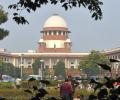
The Supreme Court on Friday dismissed a plea seeking stay on further sale of electoral bonds ahead of assembly elections.

A number of listed companies are not to be found on their registered address. The stock exchange has also been unable to contact them through other means. These 50 companies had been suspended for violations for more than six months. The BSE had reached out to them with show cause notices in December 2020.

The Reserve Bank of India's (RBI) new rules for credit and debit cards came into effect from October 1. These include tokenisation, one-time password (OTP) for activation after 30 days, written permission for enhancement of credit limit, and greater clarity on interest calculation.

The main difference of opinion between RBI and FinMin is over the transfer of the RBI's 'excess' capital reserves. The Jalan panel seeks to convince finance secretary Subhash Garg to soften his dissent note language. The move is aimed at maintaining the now-cordial relations between the RBI and the finance ministry.

The corporate sector does not care from where the money is coming.

The reason for the stickiness in bond yields can be many, but the most responsible is the liquidity deficit stance taken by RBI, says Anup Roy.

The final and most significant reset in the relations between the government and the RBI is the manner in which the process of appointing the governor and deputy governors of the central bank has been changed.

'Trust your new governor,' Omkar Goswami advises RBI Deputy Governor Viral Acharya. 'Just because he is from the IAS and doesn't carry a PhD from a US university does not make him unsuitable for the task.' 'If anything, Das will pour oil on troubled waters, and save the RBI's reputation.'

'India is possibly the most fiscally constrained market in the region.'

The poor deployment of WLATMs has tripped what the central bank sought to achieve back in 2012.
He will be the first bureaucrat to head the central bank in almost five years.

'Last year, Rs 20,000 crore was ripped off from the banking system.' 'The situation has deteriorated under the Modi government.'

Concerned over elevated inflation, Reserve Bank of India on Friday decided to leave the benchmark interest rate unchanged at 4 per cent but maintained an accommodative stance, implying more rate cuts in the future if need arises to support the economy hit by the Covid-19 pandemic.

New ministry will bring much-needed transparency in the functioning of the cooperatives, which so far have been riddled with allegations of political interference and mismanagement.

From FY18, Ind-AS will be mandatory for all listed entities, barring those listed on the SME platform.

RBI's tricky strategy to ease market's pre-Fed jitters.

Falling sales since demonetisation has alarmed CEOs, who want to save cash till the economy recovers.

The finance minister's meeting with chief executives and managing directors of banks ahead of the Union Budget assumes significance in view of the critical role the banking sector plays in boosting consumer demand across sectors.
RBI will be cautious easing rates further given oil price uncertainties
'The assumed linear correlation between forced lower yields, higher bank borrowing from the RBI, higher lending, and higher growth involves leaps of faith, each a step on the quicksand of false beliefs,' warns Debashis Basu.
